
This year’s CES event happened just a few short weeks ago in early January and Razer brought some pretty powerful stuff to the table. From a haptic gaming cushion to a new USB-C dock, here’s everything that Razer announced at CES 2024.
Project Esther

Razer revealed a brand new haptic gaming cushion codenamed Project Esther, a product that makes use of Razer’s HD Haptics technology called Razer Sensa.
Project Esther is a “sophisticated software-device integrated platform using Interhaptics technology, allowing for greater developer customization and enriched gaming experiences,” according to Razer. “Game developers have full control over the haptics’ directionalist, multi-actuator experiences, and multipple-device integration between different platforms and peripherals. In addition to this full range of customization features, the software also offers a plug-and-play solution, made possible via automaitc audio-to-HD-haptics conversion.”
The first-of-its-kind gaming cushion includes a variety of features, including:
- Wideband, High-Definition Haptics: Delivering complex and realistic tactile sensations for unparalleled immersion.
- True-Positional Haptics: 16 Haptic actuators create a genuine sense of in-game direction, distance, and location.
- Adjustable Straps for Universal Fit: Compatible with most gaming and office chairs, ensuring a personalized gaming setup.
- Razer HyperSpeed Wireless: Offering ultra-low latency for gaming and seamless media content enjoyment from compatible devices.
This definitely has the potential to be super cool — and I really hope it is — but I can also see it being a totally overpriced gimmick if it ends up being a couple hundred bucks. Obviously, there’s some tech in there that seems pretty high-end, so I’m not expecting it to be low-budget, but Razer needs to find the sweet spot or else nobody’s going to buy into it.
Razer Blades

Razer also unveiled its latest lineup of Razer Blade laptops with “groundbreaking hardware and world first innovations.” What are these innovations, you ask?
- Calman Verified Displays: Each model in this generation of Razer Blades features displays that are Calman Verified, ensuring professional-grade color accuracy and visual fidelity straight out of the box.
- Dynamic Lighting with Windows 11: The integration with Windows 11 allows for dynamic lighting control, expanding the Razer Chroma ecosystem. This feature lets users synchronize their Razer Chroma devices and other compatible third-party devices for a cohesive and immersive RGB experience.
- Enhanced Audio with THX Integration: Through Razer Synapse, each Razer Blade now comes with full THX integration. This enhancement enables users to enjoy custom EQ profiles or choose from optimized settings, ensuring an immersive audio experience whether gaming, watching movies, or listening to music.
Calman verification means the displays have been thoroughly tested in various areas like illuminance, gamma, and color temperature to ensure the tested displays hold up to professional standards.
The new Razer Blade 16 features the world’s first OLED 240Hz 16″ display, which offers more graphics power per cubic inch than any other gaming laptop on the market, according to Razer. It also packs the new Intel Core i9-14900HX processor and NVIDIA GeForce RTX 4090 graphics.
An interesting addition that I haven’t seen before is the dual mode Mini-LED display option functionality. Razer allows users to switch between high-resolution creative work and high-refresh-rate gaming with the only gaming display that can natively switch between UDH+ 120Hz and FHD+ 240Hz modes.
While it’s certainly an interesting functionality, unless it’s a simple and seamless “touch of a button” type deal, I don’t see many people using it all that much. Sure, the performance mode offers a 2x refresh rate, but is the difference between 120 and 240Hz really enough to warrant switching to a lower resolution? I’m not so sure.
The Razer Blade 16 retails for $3000, and is available for purchase now.
Razer also announced the Razer Blade 14 and Razer Blade 18, but there aren’t many details about either laptop quite yet. However, we do know the Razer Blade 18 will feature a 4K 165Hz 18-inch display and use Thunderbolt 5 for connectivity and charging. Pricing for both laptops has yet to be announced.
Razer USB-C Dock

A first for Razer, the new USB-C dock aims to provide users with seamless connectivity and maximum performance. The dock features:
- Expansive 11-Port Design: The dock is equipped with a variety of ports, including 4 USB-A, 2 USB C, Gigabit Ethernet, HDMI, a 3.5 mm audio combo jack, and UHS-I SD/MicroSD card slots, providing comprehensive connectivity options.
- High-Definition Display Output: With 4K 60 Hz support via HDMI, users can enjoy extended monitor support, ideal for vibrant creative work or high-frame-rate gaming.
- Immersive 7.1 Surround Sound: The dock’s 3.5mm audio jack delivers advanced 7.1 surround sound, offering an immersive, accurate audio experience for both stereo and multi-channel content.
- Robust and Lightweight Design: Crafted from thermally optimal aluminum alloy, the dock’s unibody design is not only strong but also offers efficient thermal management.
- Powerful Charging Capabilities: The dock supports 85 W laptop charging, ensuring your devices stay powered and ready for action. (USB charging cable and adapter not included)
- Universal Compatibility: This dock extends port connectivity to a broad range of devices, including PCs, MacBooks, iPads, and Chromebooks.
While the Razer USB-C dock does support many devices, it’s clear that the hope is for it to be used alongside other Razer devices like the new Razer Blade laptops.
I’m honestly kind of surprised that it’s taken this long for Razer to hop on the docking station train, since we’ve seen so many of them hit the market in the last couple of years, and it just kind of feels like a perfect fit for Razer with the vast amount of peripherals and devices that they offer.
Unfortunately, it doesn’t look like Razer is innovating much in the pricing department as their USB-C dock is just as expensive as ever at $120. I really don’t understand why companies feel the need to value these things so high — maybe I’m just ignorant to how expensive it actually is to produce them? I just feel like these docks should be like $100 max.
Razer Iskur V2
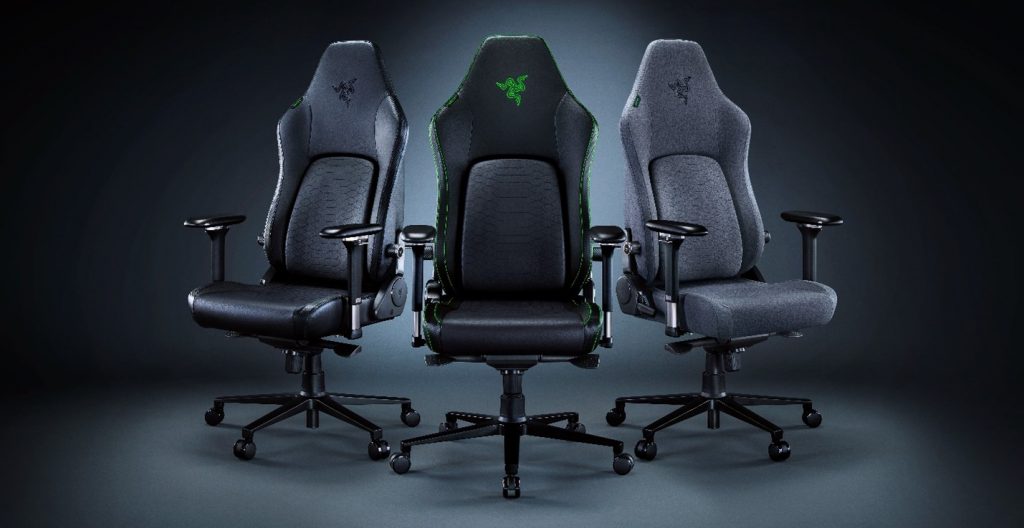
Razer also announced an updated version of their Iskur gaming chair. According to Razer, it features high-density foam cushions and reactive seat tilt to “enable gamers to find their perfect angle for both intense gaming and relaxation periods.”
I’m not exactly sure what “reactive seat tilt” is, but Razer seems to believe in it, as they call the Iskur “not just a chair, but a gaming throne built to withstand the test of time and trend.”
The Razer Iskur V2 is available now for $650.
Razer Aether Monitor Light Bar

The last big announcement that Razer made at CES 2024 was their new Aether Monitor Light Bar.
Another surprising first for Razer, the Aether light bar is part of the Razer “Gamer Room Line” that also includes the Aether Lamp Pro, Aether Lamp, Aether Light Bulb, Aether Light Strip, and Aether Light Strip Extender.
The Aether Monitor Light Bar is powered by a universal smart home technology called Matter, and is designed to work with other devices supported by Matter as well.
Unfortunately, it falls victim to the steep price tag that so many “gamer products” see, with the Aether Monitor Light Bar costing $130. At that price, it doesn’t really matter how good your product is — it’s just inaccessible to most people at that point.
Other announcements
That’s it for the product reveals, but Razer announced a few other things that are less product-central like a new sustainability initiative.
“Razer is delighted to announce that from 2024 onwards, all new PC peripheral products will incorporate recycled materials. This commitment encompasses all new product launches across Razer’s mouse, keyboard, and headset categories, in Razer’s signature black colorway, and is part of a multi-year plan to introduce recycled materials into all new products.”
The new approach was tested on two existing Razer products, the DeathAdder V2 X HyperSpeed and the Ornate V3, each of which was produced with at least 20% recycled materials.
Razer also announced several updates to its existing Chroma and Synapse softwares. The updated Razer Synapse now sees up to 30% faster performance, and Razer Chroma received a new standalone application that allows users to quickly customize the lighting of their Razer devices.
What are your thoughts on Razer’s CES announcements? Personally, I’ll be trying to get my hands on that haptic gaming cushion. I think that thing has some serious potential!



 Wallflower Writing
Leave a comment